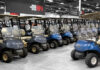










It’s great to find a deal when replacing a set of deep-cycle batteries for your golf car, but some bargain-basement batteries can bring hidden costs and safety risks. Low-quality batteries are seeping into the market, and many golf car owners need to be aware of the reasons why these types of batteries can be up to 50% less than premium brands. When it comes to inexpensive deep-cycle batteries, the price often reflects the components that are used inside. Lower-quality components and cost-cutting construction methods directly affect the battery’s overall performance, increase unforeseen costs, limit overall operating range, and bring about several safety hazards.







RAPID PERFORMANCE DEGRADATION
Battery dealers report that low-quality flooded lead-acid (FLA) batteries last only two or three years, requiring frequent replacement. This raises operating costs over time. Higher-quality FLA batteries, which cost more upfront, contain greater amounts of lead and a stronger, more efficient cell design. Golf car owners who perform routine maintenance on quality FLA batteries and who prevent them from being discharged below 50% of their capacity often report that they can last up to six or seven years.
There are also “cheap” Lithium batteries on the market, which often use recycled electric vehicle cells or “Grade B” cells. These are batteries that miss the manufacturing threshold of testing for Grade A designation. While these batteries have 90-95% of the capacity, they degrade faster, have lower energy density, and shorter cycle life. This is why they cost 30-50% less than a premium battery.
DECREASED OPERATING RANGE
A budget battery’s advertised amp-hour (Ah) rating is frequently exaggerated. Golf car owners often experience drastically lower real-world driving distances compared to premium batteries. This holds true with both lead-acid and Lithium-ion batteries. The reason is that many budget batteries have fewer active materials, which, by nature, have lower energy density and store less energy compared to premium batteries of the same size and Ah rating.
Budget Lithium batteries often use a low-quality Battery Management System, which can fail to properly balance the internal cells, causing some cells to have less voltage than others. This often leads to batteries that can’t reach a full charge, reducing their usable operating range. A low-quality BMS that isn’t properly monitoring each battery cell can shut down the entire battery prematurely, especially when current demands are high (hill climbing and heavy loads), leaving you stranded.
SAFETY HAZARDS
Many budget Lithium and Lead Acid batteries use subpar internal connections such as spot welding, poor soldering wire connections, and flimsy plastic casings. Prolonged golf car vibration can cause these joints to fracture, leading to short circuits and melting wires, which are fire hazards.
Cheap or damaged cases on lead-acid batteries can crack or leak sulfuric acid, causing chemical burns and a fire hazard as hydrogen gas can be emitted.
A low-quality BMS typically also has low-quality cell sensors and will not properly regulate charging or discharging temperatures, which can lead to a fire hazard.
While some battery manufacturers continue to try to cut costs to lower the price and increase sales, premium battery manufacturers often look to improve reliability, increase operating times/range, and essentially make their batteries more cost-effective and safe by meeting UL certification standards (Li batteries). Purchasing a premium battery can come at a higher initial cost. Still, it also brings the peace of mind that it will perform better, last longer, and ultimately may be less expensive to operate in the long run. For more information, visit www.usbattery.com.